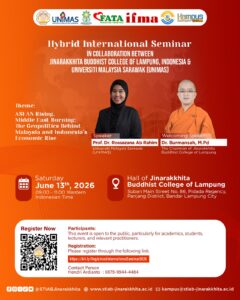
HYBRID INTERNATIONAL SEMINAR
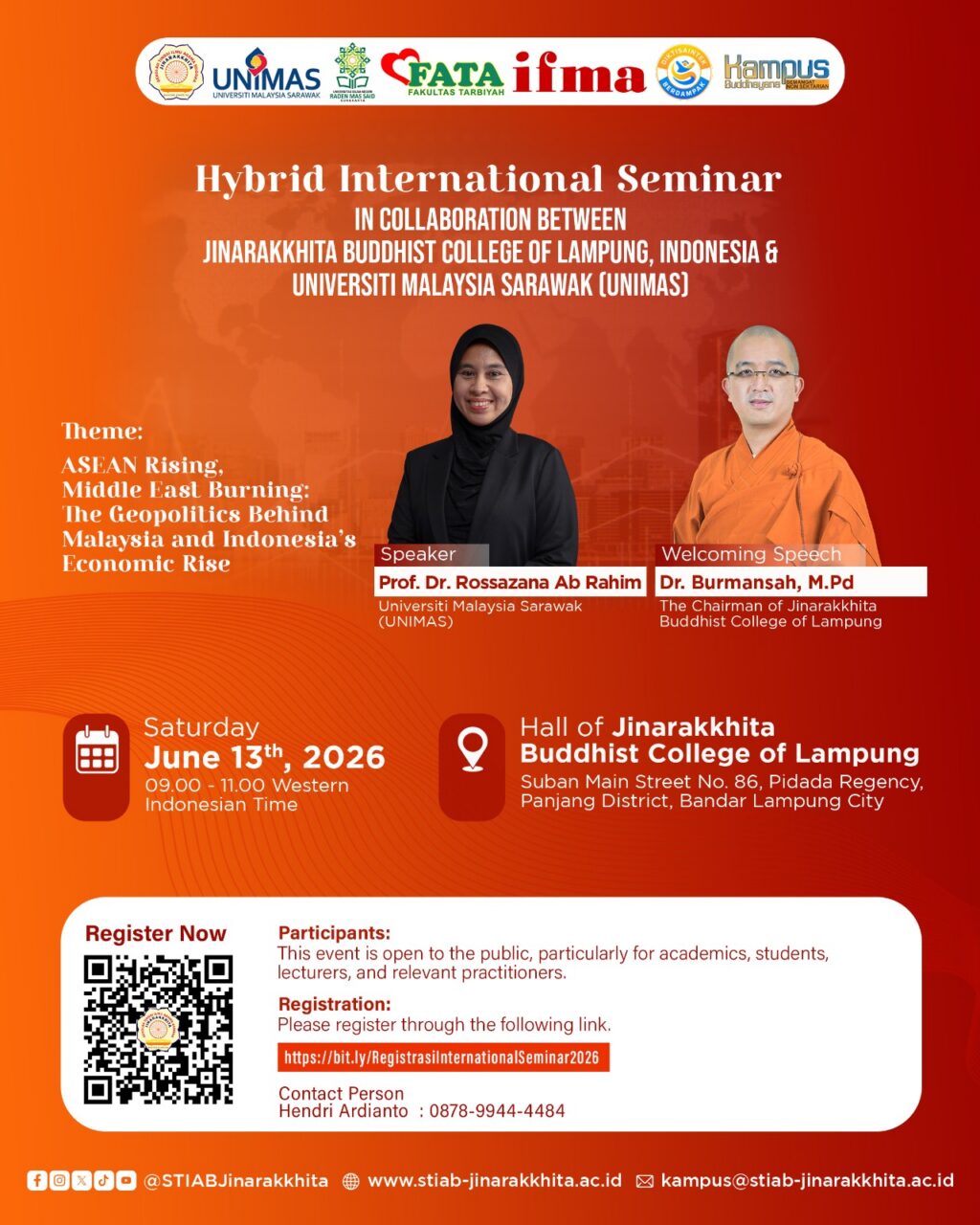
ASEAN Rising, Middle East Burning: The Geopolitics Behind Malaysia and Indonesia’s Economic Rise
Background
The economic development of the Southeast Asian region over the past two decades has demonstrated an increasingly significant trend, particularly in key countries such as Malaysia and Indonesia (Juned et al., 2025). These two countries have not only experienced relatively stable economic growth but have also played a strategic role in strengthening ASEAN’s position as one of the fastest growing regions in the world. Structural economic transformation, increased foreign investment, and the strengthening of the industrial and service sectors have become the main indicators driving this growth acceleration (Park, 2024). On the other hand, global geopolitical dynamics, particularly ongoing conflicts and tensions in the Middle East, have shaped the global political economic configuration, indirectly impacting stability and growth opportunities in other regions, including ASEAN (Masatoshi, 2024). These geopolitical tensions have triggered disruptions in global supply chains, fluctuations in energy prices, and shifts in international trade and investment flows (Kuznar, 2024).
Conceptually, the relationship between geopolitics and economic growth has become a central concern in international political economy studies. This perspective emphasizes that global political stability is a crucial prerequisite for achieving inclusive and sustainable economic growth (Hasugian et al., 2024). However, there exists a gap between the ideal condition where global geopolitical stability is expected to serve as a foundation for equitable economic growth and empirical reality, which shows that instability in one region can create strategic opportunities for other regions (Melzatia et al., 2025). In this context, conflicts and instability in the Middle East have indirectly encouraged investment relocation, diversification of global supply chains, and the shifting of production centers to relatively more stable regions such as Southeast Asia (Solehudin, 2025). Therefore, the economic rise of Malaysia and Indonesia cannot be entirely separated from changes in the global geopolitical landscape, including shifts in global economic centers and the increasingly dynamic redistribution of international investment flows.
Several empirical data support this phenomenon. According to the World Bank (2024), Indonesia’s economic growth has remained around 5% annually in recent years, indicating strong domestic economic resilience amid global pressures (Raysa Putri Nabila Hasibuan et al., 2025). Meanwhile, Malaysia has recorded growth of approximately 4–5%, with significant contributions from the manufacturing sector, international trade, and technology based services (OECD, 2019). Furthermore, an IMF report (2024) indicates that the ASEAN region has become one of the primary destinations for global investment relocation (global supply chain diversification), particularly following rising geopolitical tensions in strategic regions such as the Middle East and Eastern Europe (Lee, 2024). Data from (Zaza et al., 2025) also show that Foreign Direct Investment (FDI) inflows to Southeast Asia have exceeded USD 220 billion, with Indonesia and Malaysia as the main recipients. This increase reflects global investor confidence in the stability and economic prospects of the ASEAN region.
Moreover, this phenomenon is supported by increasing regional economic integration through various cooperation frameworks such as the ASEAN Economic Community (AEC) and the Regional Comprehensive Economic Partnership (RCEP), which further enhance the region’s attractiveness as a new center of economic growth (Seah et al., 2024). In the context of increasingly complex globalization, the ability of ASEAN countries to adapt to geopolitical changes has become a key factor in sustaining economic growth momentum (Bharti & Kumari, 2024). Thus, the relationship between geopolitics and economics is no longer linear but multidimensional and dynamically interconnected.
The urgency to examine this topic is increasing, given the rapid, non-linear, and uncertain nature of global geopolitical changes. Without a comprehensive understanding of the relationship between geopolitical dynamics and economic growth, there is a risk of policy misinterpretation and suboptimal utilization of strategic opportunities by ASEAN countries (Anwar, 2024). Additionally, academic discourse in Indonesia remains relatively limited in directly linking conflicts in the Middle East with their implications for regional economic growth in Southeast Asia, highlighting the need for deeper and more interdisciplinary academic dialogue.
Therefore, this international seminar is organized as an academic platform to critically, analytically, and comprehensively discuss the relationship between global geopolitical dynamics and the economic rise of Malaysia and Indonesia. This activity also represents a concrete implementation of academic collaboration between Universiti Malaysia Sarawak and STIAB Jinarakkhita Lampung, which is expected to strengthen research collaboration, knowledge exchange, and the development of global perspectives in international political economy studies. Furthermore, this seminar is expected to generate constructive academic recommendations for policy development and economic strategies at both national and regional levels.
In addition, it is important to highlight the policy implications of these dynamics. Shifts in investment flows and changes in global supply chain configurations require adaptive policy responses from the governments of Indonesia and Malaysia, including regulatory reforms, infrastructure development, and the strengthening of human resource capacity. Without appropriate strategies, opportunities arising from global geopolitical disruptions may not be optimally utilized and may even create new vulnerabilities, such as dependence on specific sectors or pressures on macroeconomic stability. Therefore, an interdisciplinary approach integrating economic, political, and international relations perspectives is crucial in understanding and responding to these global dynamics.
From an academic perspective, examining the relationship between conflicts in the Middle East and economic growth in Southeast Asia also opens opportunities for developing new theories and approaches in international political economy studies. This includes analyzing how developing countries can leverage global momentum to enhance competitiveness while maintaining domestic stability. Thus, this seminar is not only practically relevant but also contributes theoretically to enriching the body of knowledge in geopolitics and the global economy.
Theme of the Event
“ASEAN Rising, Middle East Burning: The Geopolitics Behind Malaysia and Indonesia’s Economic Rise”
Objectives of the Event
- To analyze the impact of global geopolitical dynamics on economic growth in the ASEAN region.
- To understand the role of Malaysia and Indonesia in the regional and global economic landscape.
- To enhance participants’ academic understanding of International relations and political economy.
- To strengthen academic cooperation between Universiti Sarawak Malaysia and Jinarakkhita Buddhist College of Lampung.
Benefits of the Event
- For academics: to broaden perspectives in the study of geopolitics and economics.
- For students: to enhance understanding of contemporary global issues.
- For institutions: to strengthen international collaboration.
Speaker
Prof. Dr. Rossazana Ab Rahim, Universiti Malaysia Sarawak, Malaysia.
Organizer
This event is organized by Jinarakkhita Buddhist College of Lampung in collaboration with Universiti Malaysia Sarawak.
Time and Venue
Day/Date : Saturday, June 13th, 2026
Time : 9:00 AM to 11:00 Western Indonesian Time
Venue : Hall of Jinarakkhita Buddhist College of Lampung
Participants
The participants of this event are all students of Jinarakkhita Buddhist College of Lampung, totaling 171 students. They come from various study programs, consisting of 53 students from the Buddhist Education Department, 64 students from the Buddhist Communication Science Department, and 54 students from the Buddhist Business and Management Department.
Form of Activity
This international seminar will be conducted in the form of:
- Presentation of materials by the speaker
- Discussion and question and answer session
Rundown
INTERNATIONAL SEMINAR RUNDOWN
Jinarakkhita Buddhist College of Lampung
| Time (WIB) | Activity | Organizer / Remarks |
| 08:30 – 08:59 | Registration | Students of Education, Communication & Business Study Programs |
| 09:00 – 09:20 | Opening: 1. National Anthem (Indonesia Raya) 2. Mars of Jinarakkhita Buddhist College of Lampung | MC: Cening Ayu Wulan Conductor: Vina Pujayanti |
| 09:21 – 09:25 | Prayer | Dr. Juni Suryanadi, M.Pd., M.M. |
| 09:26 – 09:35 | Welcoming Speech by the Head of Jinarakkhita Buddhist College of Lampung | Dr. Burmansah, M.Pd. |
| 09:36 – 09:41 | Profile Video of Jinarakkhita Buddhist College of Lampung | LPTIK |
| 09:42 – 09:58 | Speaker Introduction | Moderator: Ayu Andriyaningsih, S.Pd., M.A. |
| 09:59 – 11:00 | Main Session (General Lecture) Theme: ASEAN Rising, Middle East Burning: The Geopolitics Behind Malaysia and Indonesia’s Economic Rise | Presented by:
Prof. Dr. Rossazana Bt Ab Rahim |
| 11:01 – 11:35 | Q&A Session | Moderator & Participants |
| 11:36 – 11:50 | Certificate & Plaque Handover | Speaker & Chairman of Jinarakkhita Buddhist College of Lampung |
| 11:51 – 12:00 | Photo Session & Closing | Documentation with all participants |
| 12:00 – 13:00 | Lunch | Lunch with institutional leadership |
Methods of the International Seminar
In order for this International Seminar not only to provide additional knowledge and insights for participants, but also to equip them both individually and institutionally with a comprehensive understanding of global geopolitical dynamics and their implications for economic growth in the ASEAN region, particularly in Indonesia and Malaysia, the seminar is designed in a systematic, interactive, and well-structured manner as follows:
| International Seminar Session
Theme: ASEAN Rising, Middle East Burning: The Geopolitics Behind Malaysia and Indonesia’s Economic Rise
Opening Remarks: Dr. Burmansah. M.Pd. (The Chairman of Jinarakkhita Buddhist College of Lampung)
Speaker: Prof. Dr. Rossazana Bt Ab Rahim
Moderator: Ayu Andriyaningsih, S.Pd., M.A. |
Overview of the International Seminar at Jinarakkhita Buddhist College of Lampung
This activity is an international scale academic seminar organized by STIAB Jinarakkhita Lampung as part of the implementation of the Tridharma of Higher Education, particularly in the fields of education, communication, and business and management. The seminar raises the theme of global geopolitical dynamics, focusing on the economic rise of the ASEAN region and the conflicts and tensions occurring in the Middle East.
In the context of increasingly complex globalization and global economic transformation, geopolitics plays a crucial role in determining the direction of a country’s economic growth. ASEAN, particularly Indonesia and Malaysia, has demonstrated a positive growth trend amid global instability, including conflicts in the Middle East that impact the economy, energy sector, and international stability. Therefore, this seminar serves as an academic platform to understand the interconnection between global geopolitics and national economic development strategies.
This activity involves lecturers, students, researchers, practitioners, and the general public, both domestically and internationally, to encourage the exchange of ideas and global perspectives.
Role of the Speaker
The speaker will deliver the material systematically, comprehensively, and from a global perspective, covering:
- Fundamental concepts of geopolitics and their influence on the global economy
- Analysis of ASEAN’s economic rise, particularly Indonesia and Malaysia
- The impact of conflicts and tensions in the Middle East on global economic stability
- Strategies of developing countries in responding to global geopolitical dynamics
- The role of higher education in preparing human resources that are adaptive to global changes
- Duration of presentation: approximately 60 minutes
- The speaker is allowed to use presentation media
Role of the Moderator
The moderator is responsible for:
- Opening the seminar and introducing the speaker
- Providing an introduction to global geopolitical issues and their economic implications
- Guiding the discussion to remain focused, systematic, and interactive
- Raising guiding questions, such as:
- How does geopolitics influence economic growth in the ASEAN region?
- Why are Indonesia and Malaysia able to demonstrate growth amid global instability?
- What are the impacts of conflicts in the Middle East on global and regional economies?
- How do developing countries respond to global geopolitical pressures?
- What is the role of education in preparing a generation ready to face global dynamics?
- Managing the question-and-answer session between participants and the speaker
Discussion and Q&A Session
Following the presentation, the session will continue with:
- Interactive discussion between the speaker and participants
- A direct question-and-answer session
- Exchange of ideas and experiences among participants
- Duration: approximately 30–45 minutes
Implementation Guidelines
- The seminar will be conducted offline (in-person)
- Participants are expected to adhere to academic ethics
- The speaker and moderator will use formal language (Indonesian/English)
- The seminar is designed to be interactive and participatory
Closing
At the end of the session, the moderator will deliver:
- A summary of the seminar outcomes
- Key points that can be implemented
- Expectations for future collaboration and follow-up activities
Expected Outputs
- Increased participant understanding of geopolitical and ASEAN economic issues
- Establishment of further academic collaboration
- Scientific documentation of the seminar activities
Conclusion
These Terms of Reference (ToR) have been prepared to serve as a guideline for the implementation of the international seminar. It is hoped that this event will make a tangible contribution to the advancement of academic knowledge and strengthen international cooperation networks.
References
Anwar, A. (2024). Economic Relations Between China and Asean: The Shadow of the South China Sea Issue. Köz-Gazdaság, 19(1). https://doi.org/10.14267/retp2024.01.03
Bharti, M. S., & Kumari, S. (2024). China’s Belt and Road Initiative in Southeast Asia and its implications for ASEAN-China strategic partnership. Asian Review of Political Economy, 3(1). https://doi.org/10.1007/s44216-024-00042-4
Hasugian, F. M. S., Dari, M. W., Siahaan, T. E. G., Akmalia, U., & Matondang, K. A. (2024). Analisis Pengaruh Stabilitas Politik Terhadap Keberhasilan Persekutuan dalam Kerjasama Ekonomi Internasional. EKOMA : Jurnal Ekonomi, Manajemen, Akuntansi, 4(1). https://doi.org/10.56799/ekoma.v4i1.5921
Juned, M., Martin, A., Saripudin, M. H., & Salam, S. (2025). Bridging polarities: implications of ASEAN member States’ proposals for joining BRICS and OECD on indo-pacific geoeconomics. Social Sciences and Humanities Open, 12. https://doi.org/10.1016/j.ssaho.2025.102101
Kuznar, A. (2024). Shaping the Economic Resilience in East Asia through International Trade. In Regional Cooperation and Resilience in East Asia. https://doi.org/10.4324/9781003458357-4
Lee, J. W. (2024). Comment on “ASEAN Economic Integration: Addressing Challenges and Embracing Opportunities.” In Asian Economic Policy Review (Vol. 19, Number 2). https://doi.org/10.1111/aepr.12463
Masatoshi, H. (2024). China-ASEAN Economic Ties: Balancing Growth amid Middle-Income Challenges and Opportunities. SocioEconomic Challenges, 8(1). https://doi.org/10.61093/sec.8(1).31-51.2024
Melzatia, S., Mahroji, Apollo, & Zahri, A. (2025). Geopolitical Conflict and Indonesia’s Economic Stability. Jurnal Lemhannas RI, 12(4). https://doi.org/10.55960/jlri.v12i4.1132
OECD. (2019). OECD Economic Surveys Malaysia Overview. In OECD Publishing, Paris (Number July).
Park, C. Y. (2024). ASEAN Economic Integration: Addressing Challenges and Embracing Opportunities. In Asian Economic Policy Review (Vol. 19, Number 2). https://doi.org/10.1111/aepr.12462
Raysa Putri Nabila Hasibuan, Johan Paulo Negos Sinaga, Hannes Inmanuel Sinaga, Kristian Ronaldo Tampubolon, Dionisius Sihombing, & Fadli Agus Triansyah. (2025). Analisis Kondisi Perekonomian Indonesia 2020-2024. Jurnal Rimba Riset Ilmu Manajemen Bisnis dan Akuntansi, 3(4). https://doi.org/10.61132/rimba.v3i4.2290
Seah, S., Lin, J., Martinus, M., Fong, K., Aridati, I., Thao, P. T. P., & Chee, D. (2024). The State of Southeast Asia 2024 Survey Report. In ISEAS – Yusof Ishak Institute.
Solehudin, Rd. H. (2025). Middle East Conflict and Its Implications on the Indonesian Economy. Pakistan Journal of Life and Social Sciences (PJLSS), 23(1). https://doi.org/10.57239/pjlss-2025-23.1.00354
Zaza, A. M. S. U., Banoet, R. Y., & Dima, E. T. Y. (2025). Dampak Ketengangan Geopolitik terhadap Investasi Asing Langsung (FDI) di Indonesia. Scientific Journal Of Reflection : Economic, Accounting, Management and Business, 8(3). https://doi.org/10.37481/sjr.v8i3.1175